Since the advent of social networks and the latest generation of cell phones, we live in a society where image plays a fundamental role in our relationships. It helps us immortalize our day to day and capture the moments we live. It serves to remember, not to forget. And at the same time it forces us to use the necessary filters. Some editing here, that wrinkle out, reduce those shadows that make me weird, add more saturation.
We must come out beautiful, all looking the same, so you won't think we are extravagant. It seems as if uniformity and perfection is a trend. It is in this society, and in this moment where David Campaner feeds to give free rein to his imagination and just create.
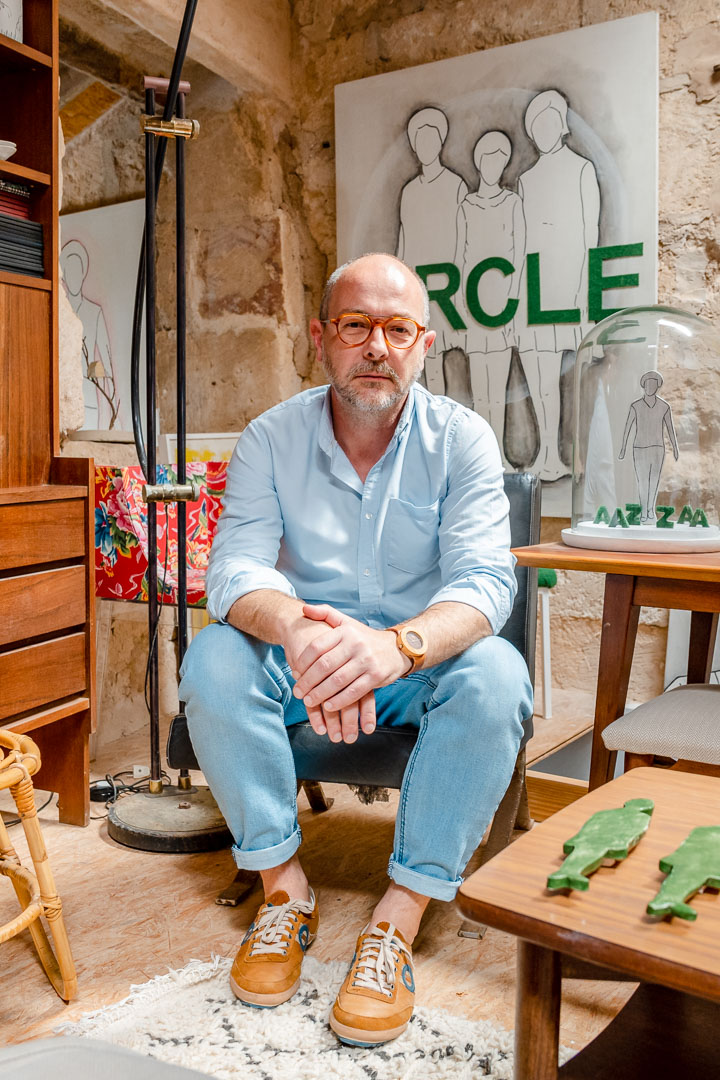
David, born in Inca in 1977, is a contemporary Mallorcan artist who has his studio in Sa Pobla. With a degree in Hispanic Philology from the UIB (University of the Balearic Islands), he currently works as a teacher of Spanish language and literature and combines it with his artistic side. Passionate about painting since he was a child, his style and form have evolved over the years. He started through some academy painting classes, a step he considers necessary. He then delved into abstract art and finally came up with his own personal style, which is constantly evolving.
"Green represents the artificial, the need to each have our own space".
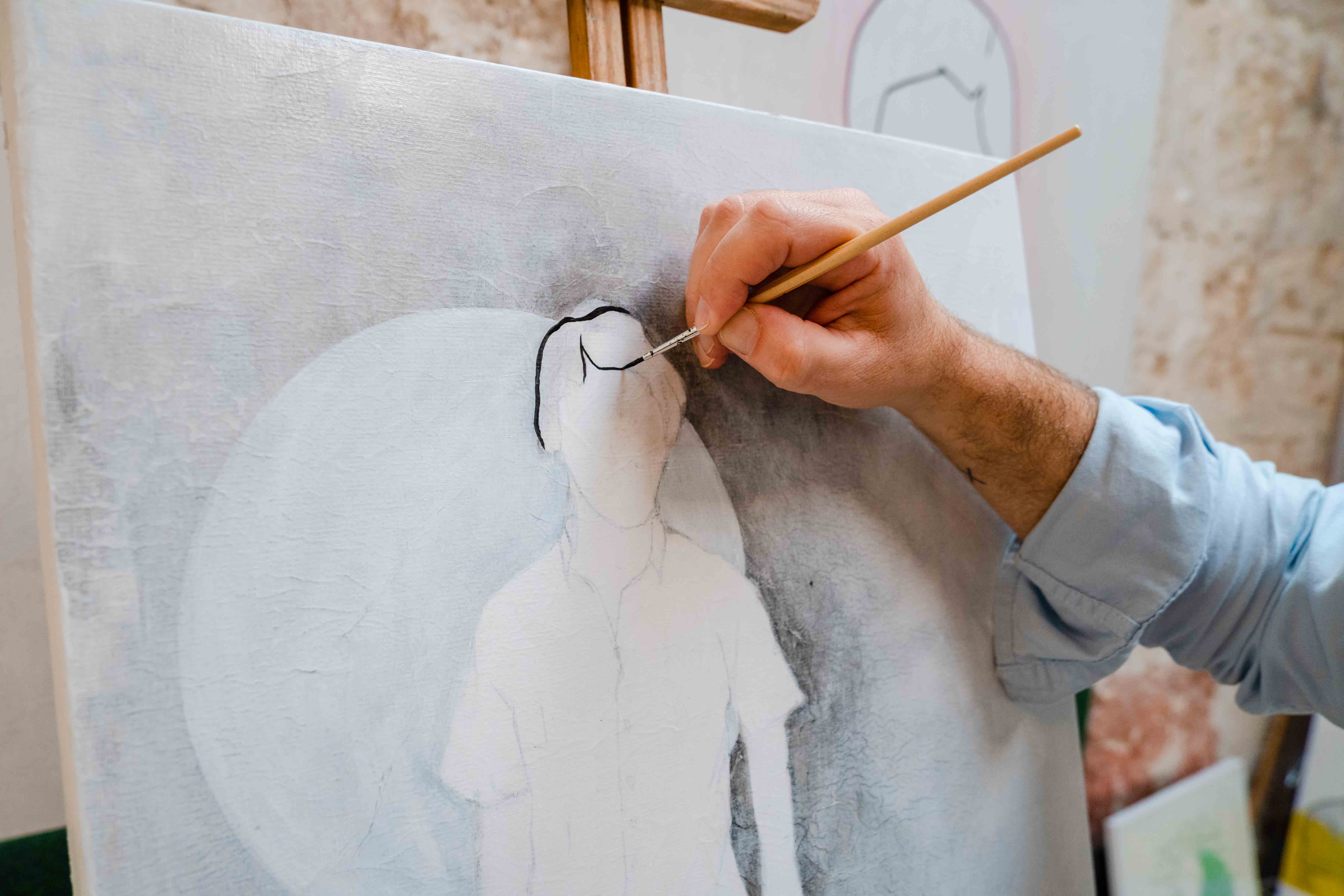
As it is the case with the rest of plastic artists, once they manage to find their style, it is easier to recognize their pieces wherever they are exhibited. First of all, the materials he uses. He began drawing on canvas, but a few years ago he switched to wood, since he paints in layers, something that is more laborious and also allows him to make more invasive interventions on the material itself. He is a methodical person, which means that his paintings are not spontaneous in the good sense of the word. He meditates a lot on what it is he wants to capture. He always carries a notebook with him to take notes. It is a progressive work.
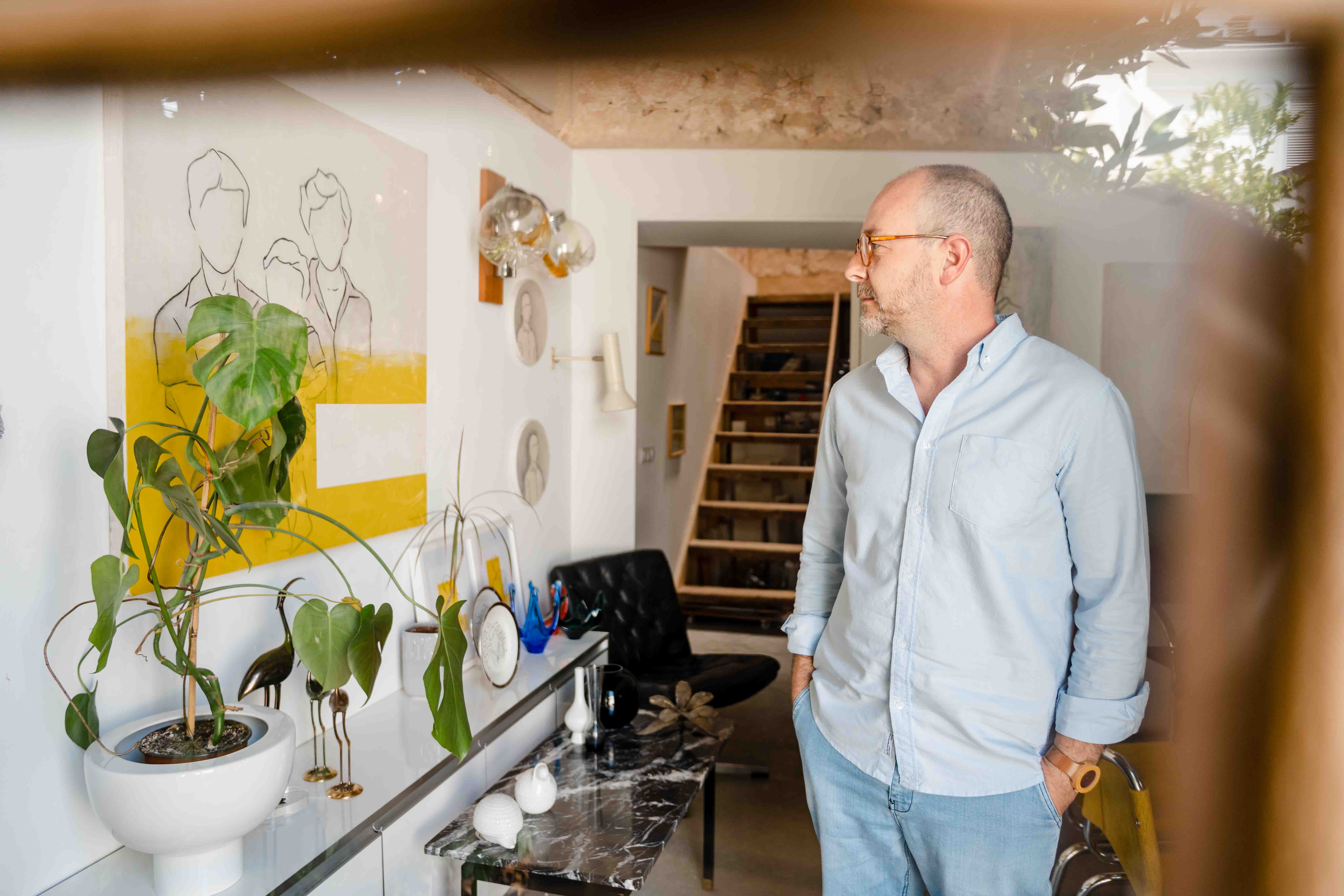
In his work the human figure is always present, a faceless silhouette, which allows those who contemplate it to be able to identify. Depending on each one of us and the moment we find ourselves in, it will have a different meaning. He uses a family album as a source of inspiration. "I don't paint my family, that's not the objective". What he tries to look for is that simplicity, which we often forget.
Although non-colors (gesso) and colorless acrylics always predominate, for some time now, we can also find green and more recently yellow. "Green represents the artificial, the need to have our own space", to give more sense to this idea, he uses not only the color, but also artificial grass, being even more evident. On the other hand, with yellow he intends to represent the light and at the same time achieve a clear contrast with the rest of the piece.
Beyond wood, he also has some collections that he has made in clay of low intensity, these composed of silhouettes and dots, in white and green. He also rescues used tableware as a canvas for some of his pieces. They must have been previously used and he must know why they have been discarded. He loves those with grimaces due to the passage of time or scratches from usage. They are part of his discourse of perfection, frustration or disappointment. Finally, he makes interventions in some galleries or spaces where he exhibits. Each intervention is different. They are ephemeral and to give creation to them, he relies on the theme of the exhibition and the place itself.
"Art serves to involve society and culture, and for this to be possible people must be a part of it".
With a long and prolific career, Campaner has had the opportunity to exhibit in various spaces and be selected to participate in various competitions: Incart (Inca), Supermarket (Stockholm), Art Athina (Athens), Sant Marçal (Marratxí), among others. Nevertheless, his works have also traveled abroad: London, Berlin, Moscow or Mexico. In all of them there has always been the fear of rejection by the public, that irrational feeling that makes us believe that we are not up to the task. Although, as he tells us "when you expose something, it is because you believe that at that moment it is something that is well done and worth to be seen".
In addition to his artistic facet, David has also worked as a curator for different art spaces: together with a diverse team, he worked for years at Incart (Inca), then Can Gelabert (Binissalem) and Art i Copes in Sa Pobla. They liked the work he had done so much in Inca and, faced with the need to give another approach to Art i Copes, the city council decided to develop a collaboration. The planning and organization of each contest usually lasts about 6 months. In each edition they work on the same axis and it is from there where they decide which artists will participate that year.
We also work with the schools so that they can elaborate didactic projects and that the children take part in the event. The participation of children is an indispensable part of the project: "art serves to involve society and culture, and for this to be possible, people must be a part of it".
Teacher, artist and curator, when we ask Campaner about his future, his answer is clear: "I live for the moment, I don't think about tomorrow. Painting serves me as a distraction and is something I like to do". We hope and wish him many more years of creation and that the muses stick around with him.